


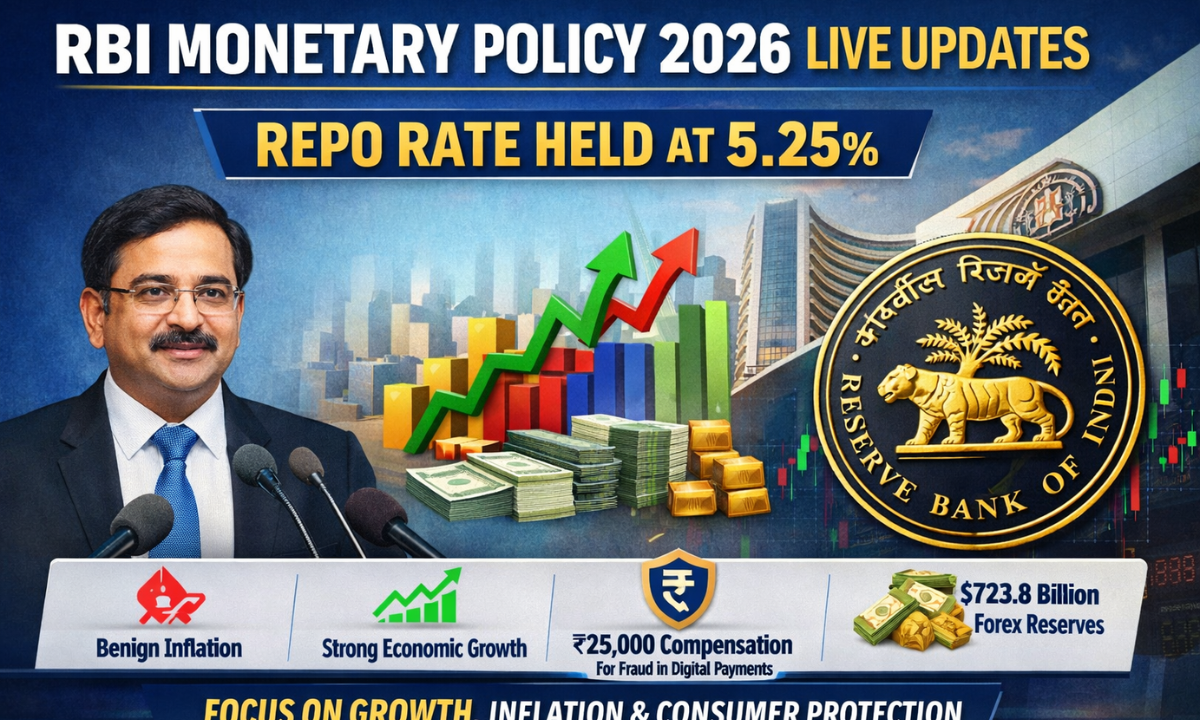
New Delhi, February 6, 2026 – The Reserve Bank of India (RBI) has announced its latest monetary policy decision after the three-day meeting of the Monetary Policy Committee (MPC). In a widely anticipated move, the central bank has decided to keep the repo rate unchanged at 5.25%, maintaining a cautious and balanced approach toward economic management. Along with this, the RBI has continued with its neutral policy stance, indicating stability in interest rates for the near future.
Repo Rate Decision: Stability Continues
The six-member MPC, led by RBI Governor Sanjay Malhotra, voted unanimously to maintain the existing policy rates. Apart from the repo rate, the standing deposit facility (SDF) rate remains at 5.00%, while the marginal standing facility (MSF) rate and the Bank Rate continue at 5.50%.
This decision reflects the central bank’s confidence in the current economic environment. Over the past year, the RBI had reduced interest rates to stimulate growth. With inflation now under control and growth showing positive signs, policymakers have chosen to pause further changes and observe economic trends closely.
Inflation Outlook: Under Control but Closely Monitored
Inflation remains a major factor behind the RBI’s policy stance. Recent data shows that consumer price inflation has stayed within the central bank’s comfort zone. Stable food prices, improved supply chains, and moderate global commodity prices have contributed to this positive trend.
However, the RBI has cautioned that certain risks remain, especially from rising prices of precious metals and imported commodities. As a result, the central bank has slightly revised its inflation outlook for the coming quarters. The RBI has made it clear that it will remain vigilant and ready to take action if price pressures increase unexpectedly.
Economic Growth and Trade Prospects
India’s economic growth outlook continues to remain strong. The RBI has highlighted steady domestic demand, rising manufacturing activity, and increasing investment as key drivers of growth. Consumer spending and infrastructure development have also supported economic momentum.
Recent international trade agreements and expanding export opportunities have further strengthened India’s global position. According to the RBI, these developments are helping the country manage external challenges and maintain economic stability despite uncertainties in the global market.
Liquidity Management and Market Support
To ensure smooth functioning of the financial system, the RBI has undertaken proactive liquidity management measures. The central bank has injected funds into the banking system through open market operations, ensuring adequate availability of credit.
These measures have helped stabilize bond yields and improved confidence among investors. The RBI has reaffirmed its commitment to maintaining sufficient liquidity so that monetary policy decisions are effectively transmitted to borrowers and businesses.
Consumer Protection and Digital Payment Safety
One of the key highlights of the 2026 monetary policy is the focus on strengthening consumer protection in digital transactions. The RBI has announced plans to introduce a new framework to compensate customers who suffer losses due to small-value digital payment frauds.
Under the proposed system, eligible users may receive compensation of up to ₹25,000 in cases of unauthorized transactions. The central bank is also working on stricter guidelines to improve cybersecurity, reduce fraud, and clarify customer liability. These steps aim to enhance trust in India’s fast-growing digital payment ecosystem.
Impact on Borrowers, Businesses, and Investors
For borrowers, the unchanged repo rate means stability in loan interest rates. Home loans, car loans, and business loans are likely to remain at current levels, offering financial predictability.
Businesses will benefit from continued access to affordable credit, supporting expansion and job creation. Investors have responded positively to the RBI’s balanced approach, with improved sentiment in bond and equity markets.
Banks and financial institutions also gain clarity from the stable policy environment, enabling better planning and risk management.
Conclusion
The RBI Monetary Policy 2026 reflects a well-balanced strategy focused on sustaining growth, controlling inflation, and protecting consumers. By keeping the repo rate at 5.25% and introducing measures to strengthen digital security, the central bank has demonstrated its commitment to long-term economic stability.
As India moves through 2026, the RBI’s cautious and proactive approach is expected to play a crucial role in supporting sustainable development and financial confidence.
Read more…India vs England Updates: U19 World Cup 2026 Final