


Prologue: A Vision in the Dark
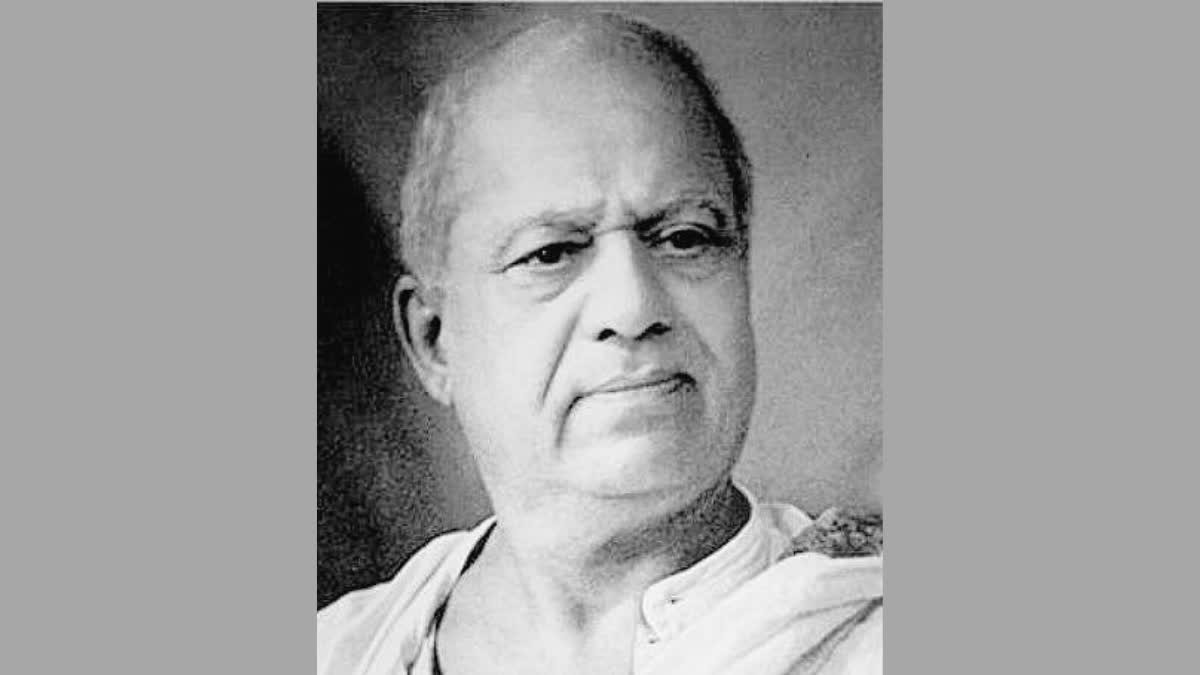
Bombay, 1911. In a crowded theatre, Dhundiraj Govind Phalke — later immortalized as Dadasaheb Phalke — sat transfixed as The Life of Christ flickered across the screen. The moving images of biblical stories stirred something profound within him. If the West could bring Christ to life on screen, why couldn’t India bring its own gods, kings, and epics to cinema? That moment became the spark that ignited Indian cinema.
Act I: The Scholar and the Craftsman
Phalke’s journey began long before that screening. Born in 1870, he was a restless learner with a passion for the arts.
Sir J. J. School of Art, Mumbai (1885): He studied drawing and fine arts, mastering perspective, composition, and color.
Kala Bhavan, Baroda: He expanded his repertoire to painting, photography, lithography, sculpture, and architecture.
This multidisciplinary training gave him a unique edge: he could visualize stories not just as narratives but as structures, images, and living tableaux.
By the mid‑1890s, Phalke had acquired a camera and began experimenting with photography and printing. He taught himself the chemistry of film development and the mechanics of image reproduction. These experiments were the seeds of his later mastery in motion pictures.
Act II: Inspiration and Determination
The screening of The Life of Christ in 1911 was transformative. Phalke envisioned Rama, Krishna, and Harishchandra on screen, portrayed with the same grandeur.
In February 1912, he traveled to London to study filmmaking. He purchased a Williamson camera, printer, and raw film stock, returning to India armed with both knowledge and tools. He established the Phalke Films Company, determined to prove that cinema could thrive in India.
Act III: Struggles and Preparations
Convincing investors was difficult. To demonstrate cinema’s potential, Phalke made a short experimental film, Ankurachi Wadh (Growth of a Pea Plant), in 1912. Shot frame by frame in a pot at his home, the film showed a seed sprouting into a plant. It was simple yet revolutionary, proving that moving images could capture life itself.
Financially, Phalke faced hardship. Investors were skeptical, so he mortgaged his house and sold his wife Saraswatibai’s jewelry to raise ₹10,000. He took on every technical role himself — scripting, directing, operating the camera, editing, and processing film.
His studio was a small glass room built at Mathura Bhavan Bungalow in Dadar, Mumbai. Every reel processed was a triumph of ingenuity over limitation.
Act IV: Making Raja Harishchandra
The subject Phalke chose was deliberate: Raja Harishchandra, a mythological king celebrated for his honesty and sacrifice. By grounding cinema in Indian tradition, Phalke ensured audiences would accept the medium as culturally authentic.
Casting was a challenge. In 1913, women were forbidden from acting in films. Even prostitutes and dancing girls refused. Phalke turned to unconventional sources: Anna Salunke, a cook and waiter at a Grant Road restaurant, agreed to play Queen Taramati. Dattatraya Damodar Dabke played Raja Harishchandra.
Phalke’s wife Saraswatibai became his indispensable partner. She managed costumes, cooked for the cast and crew, and assisted in film development at night. The making of Raja Harishchandra was not just a professional project but a family mission.
The film took six months and 27 days to complete.
Act V: Release and Reception
Raja Harishchandra was a silent film, with intertitles in Marathi and Hindi.
- Premiere: April 21, 1913, at Olympia Theatre, Bombay.
- Commercial Release: May 3, 1913, at Coronation Cinematograph in Girgaon, Mumbai.
Initially, the response was slow. Audiences were unfamiliar with cinema. Phalke marketed the film as “a mile‑long strip of 58,000 little pictures,” emphasizing its novelty. The strategy worked. Crowds began to flock, and the film became a massive success. It was later shown in other cities and even in London.
The profits allowed Phalke to make more films, establishing him as the pioneer of Indian cinema.
Act VI: Behind the Scenes Challenges
The making of Raja Harishchandra was fraught with obstacles. Equipment was scarce, film stock had to be imported, and processing required painstaking manual effort. Sets were improvised, costumes handmade, and lighting managed with natural sunlight through glass panels.
Actors were inexperienced, and social stigma surrounded the profession. Yet Phalke’s ingenuity overcame these hurdles. His studio became a hub of experimentation, and his family’s support sustained him through the struggle.
Act VII: Legacy and Preservation
Tragically, the original film did not survive intact. Today, only the first and last reels remain, preserved at the National Film Archive of India. Yet even in fragments, Raja Harishchandra stands as the genesis of Indian cinema.
Phalke went on to make 95 feature films and 27 short films over a 19‑year career, including Mohini Bhasmasur (1913) and Lanka Dahan (1917). His work inspired generations, and his title as the “Father of Indian Cinema” remains undisputed.
Act VIII: Cultural Impact
Choosing Raja Harishchandra was symbolic. The king’s story of sacrifice and truth resonated deeply with Indian audiences. By portraying mythological characters like Rama and Krishna, Phalke connected cinema to tradition, making it acceptable to a society wary of foreign influence.
This cultural grounding was crucial. It allowed cinema to be seen not as a Western novelty but as an Indian art form, capable of telling stories from epics and folklore. In doing so, Phalke ensured cinema would resonate with Indian audiences for generations.
Act IX: The Family’s Role
Behind Phalke’s genius was the support of his wife Saraswatibai. She managed costumes, food, and film processing, often working late into the night. Their children assisted in small tasks. The making of Raja Harishchandra was a family enterprise, blending domestic life with artistic creation.
Without Saraswatibai’s contributions, the film might never have been completed.
Act X: The Birth of an Industry
With Raja Harishchandra, Phalke did more than make a film. He created an industry. He trained technicians, developed processes, and proved that cinema could thrive in India. His studio became a model for future filmmakers, and his success inspired others to enter the field.
By the 1920s, Indian cinema had begun to flourish, with silent films produced across Bombay, Calcutta, and Madras. Phalke’s pioneering work laid the foundation for this expansion.
Epilogue: A Mile‑Long Strip of Dreams
On that evening in May 1913, as audiences watched Raja Harishchandra flicker across the screen, they witnessed more than a story. They witnessed the birth of an art form that would become India’s most powerful cultural force.
Phalke’s journey — from inspiration in a theatre to struggle, sacrifice, and triumph — embodies the spirit of cinema itself: a blend of vision, perseverance, and imagination. Though the film survives only in fragments, its legacy endures in every frame of Indian cinema that followed.
Dadasaheb Phalke remains immortal as the “Father of Indian Cinema,” and Raja Harishchandra stands as the genesis of a century‑long cinematic journey.