


Prologue: A Nation and an Actor on the Brink
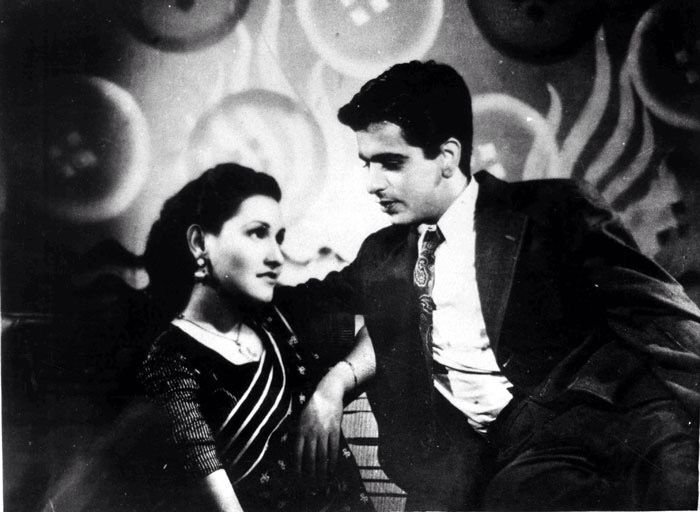
The year was 1947. India stood at the threshold of independence, its people caught between hope and upheaval. Amidst this backdrop, a film flickered onto the silver screen that would not only entertain but also change the trajectory of Indian cinema. Jugnu, directed by Shaukat Hussain Rizvi and starring Noor Jehan alongside a young, struggling actor named Dilip Kumar, became the highest‑grossing film of the year. For Dilip Kumar, it was the turning point — the moment he stepped out of obscurity and into legend.
Act I: The Struggle Years
Dilip Kumar’s journey to Jugnu was anything but smooth. His debut in Jwar Bhata (1944) had failed to impress audiences. The film’s lukewarm reception left him uncertain, and subsequent projects did little to establish him. Bombay Talkies had given him entry into the industry, but recognition remained elusive.
Between 1944 and 1947, he lived in the shadows of bigger stars. The industry was unforgiving: without a hit, actors often disappeared. Dilip Kumar was determined not to fade. He studied acting meticulously, observing seniors, refining his diction, and learning to channel emotion through restraint. Yet, he needed opportunity — and opportunity came in the form of Noor Jehan.
Act II: Noor Jehan — The Queen of Melody
By the mid‑1940s, Noor Jehan was already a phenomenon. Known as Malika‑e‑Tarannum (Queen of Melody), she was adored for her voice and screen presence. Married to director Shaukat Hussain Rizvi, she was the centerpiece of Jugnu. Casting her guaranteed attention, but the choice of her co‑star was crucial.
Industry lore suggests Noor Jehan herself played a decisive role. She recognized Dilip Kumar’s potential — his dignified presence, his command of Urdu, his quiet intensity. Despite his modest track record, she approved him as her leading man. It was a bold decision: pairing an unproven actor with a superstar. Yet, it was precisely this gamble that transformed Dilip Kumar’s destiny.
Act III: Casting Against the Odds
For Rizvi, the decision was risky. Established stars were available, yet he chose a struggling newcomer. The gamble was rooted in Noor Jehan’s confidence. She believed Dilip Kumar’s understated style would complement her charisma.
The industry buzzed with skepticism. Could a newcomer hold his own opposite Noor Jehan? Would audiences accept him? The doubts were real, but Rizvi and Noor Jehan pressed forward. Dilip Kumar was cast, and filming began.
Act IV: The Film and Its Release
Jugnu was released on May 23, 1947, at a time when India was on the cusp of independence. The timing was symbolic: a new nation was about to be born, and so was a new star.
The film’s narrative was simple yet engaging, built around romance and melodrama, with Noor Jehan’s songs weaving magic. Dilip Kumar’s performance was marked by sincerity and restraint. He did not overshadow Noor Jehan, but he held his ground — a feat in itself.
Audiences responded with enthusiasm. Jugnu became the highest‑grossing Indian film of 1947, a blockbuster that electrified cinema halls. For Dilip Kumar, it was the breakthrough he had long awaited.
Act V: Behind the Curtain — A Secret Kept
Ironically, Dilip Kumar kept his acting career hidden from his father, Aghaji, for nearly four years. His conservative family might have disapproved of films. He lived a double life — Yusuf Khan at home, Dilip Kumar on screen.
The secret unraveled only when a massive poster of Jugnu was displayed in Bandra, Mumbai. His father, stunned, realized his son was now a public figure — and a rising star. The revelation marked not just the acceptance of Dilip Kumar’s career but also the acknowledgment of his new identity.
Act VI: Musical Notes — Mohammed Rafi’s Cameo
Jugnu also holds historical significance for another reason. It featured a cameo appearance by a young Mohammed Rafi, who would later become one of India’s greatest playback singers. His brief presence in the film added another layer of legacy to its soundtrack, connecting two future legends in a single frame.
Act VII: Controversies and Context
The release of Jugnu was not without controversy. 1947 was a year of political turmoil, with Partition looming. Films were often scrutinized for their themes and associations. Rizvi and Noor Jehan, both Muslims, faced challenges in the shifting political climate.
After Partition, Rizvi and Noor Jehan migrated to Pakistan, leaving behind a legacy in Indian cinema. For Dilip Kumar, who remained in India, Jugnu became a bridge — a film that connected him to the pre‑independence era while propelling him into the post‑independence cinematic landscape.
Act VIII: The Legacy of Jugnu
The film was more than a commercial success; it was a cultural milestone. It marked the moment when Dilip Kumar transitioned from anonymity to stardom. It demonstrated the power of collaboration — Noor Jehan’s faith in him, Rizvi’s risk‑taking, and Dilip Kumar’s perseverance combined to create cinematic history.
From Jugnu onward, Dilip Kumar’s career trajectory changed forever. He would go on to deliver classics like Andaz (1949), Devdas (1955), Mughal‑e‑Azam (1960), and Ganga Jamuna (1961). Each role built upon the lessons of his debut years — the importance of restraint, the art of emotional expression, and the ability to embody both vulnerability and strength.
Act IX: The Tragedy King Emerges
Though Jugnu was a romantic melodrama, it laid the foundation for Dilip Kumar’s later persona as the “Tragedy King.” His ability to convey sorrow, longing, and emotional depth became his hallmark. Audiences connected with his vulnerability, seeing in him a reflection of their own struggles in a newly independent nation.
The seeds of this persona were sown in Jugnu. His understated performance hinted at the emotional intensity that would later define his career.
Epilogue: A Star Is Born
In retrospect, Jugnu was not just a film; it was a launchpad. It transformed Yusuf Khan into Dilip Kumar, the actor who would redefine Indian cinema with his intensity, subtlety, and emotional depth. The story of Jugnu is a reminder that stardom often begins with a single opportunity — seized, nurtured, and immortalized.
For Dilip Kumar, Jugnu was the spark that lit the flame of a legendary career. For Indian cinema, it was the moment when a new kind of actor emerged — one who combined dignity with vulnerability, restraint with passion.