


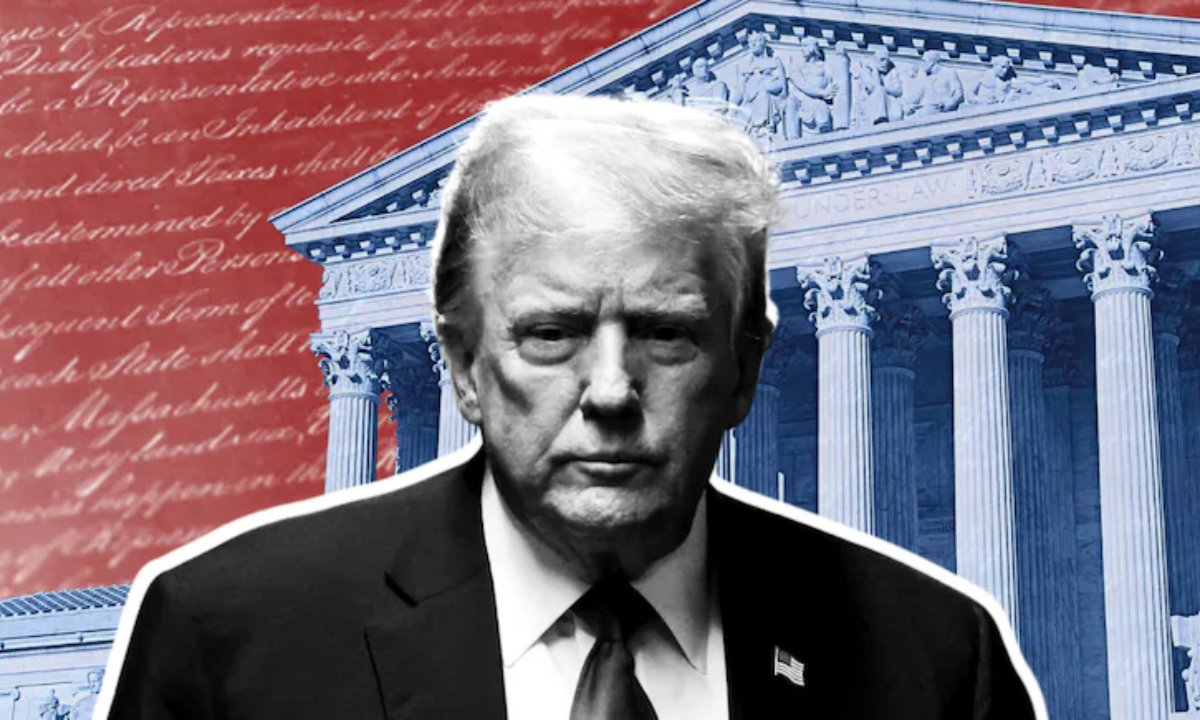
Former U.S. President Donald Trump has announced that he plans to impose a new 15% tariff on imports if he wins the next presidential election. But trade analysts and lawyers believe that this new tariff policy could again face serious legal challenges, as was the case during his first presidential term.
Here’s why the new tariffs could again face legal issues:
1. Presidential Power in Question
During his presidency, Trump has used Section 232 of the Trade Expansion Act of 1962 (concerning national security) and Section 301 of the Trade Act of 1974 (concerning unfair trade practices) to impose tariffs on imports from countries such as China and U.S. allies.
Although the courts have largely supported the president’s power to impose tariffs during his presidency, some critics believe that tariffs such as a blanket 15% tariff could be outside the intended scope of these laws.
If the tariffs are legitimate on grounds of national security, the opposition can contend that there is not enough evidence to support the action, which could then be challenged in court.
2. Possible Infringement of Trade Agreements
The broad 15% tariff may violate U.S. obligations as a member of the World Trade Organization (WTO).
The WTO establishes a maximum tariff “bound rate” that countries agree not to exceed. If the new tariffs exceed these rates or are discriminatory, the affected countries may pursue a case.
While WTO decisions do not automatically invalidate U.S. laws, they can permit the imposition of “retaliatory tariffs,” increasing trade tensions worldwide and further weakening the U.S. legal position globally.
3. Possible Lawsuits in U.S. Courts
U.S. importers, producers, and trade organizations may sue the U.S. government in domestic courts on grounds of:
- Unlawful exercise of statutory authority
- Failure to follow procedural requirements
- Violation of the Administrative Procedure Act
During Trump’s first term, cases involving tariffs have already reached the U.S. Court of International Trade and appeals courts. A new, more sweeping tariff may again trigger such litigation.
4. Major Questions Doctrine
Recently, the Supreme Court has relied on what is known as the major questions doctrine. This doctrine holds that the president does not have the authority to take action on major issues that affect the economy or politics unless Congress explicitly authorized it.
Consider a broad 15% tariff that covers trillions of dollars of imports. This is the type of action that a court might deem a “major question,” requiring Congress’s clear approval rather than relying on existing trade laws.
5. Political and Congressional Blowback
Even if tariffs like these could pass constitutional muster, they would likely face bipartisan opposition in Congress. Members of Congress concerned about inflation, supply chain costs, and consumer prices might contest presidential authority or introduce legislation to limit tariff power.
The Bigger Picture
Trump’s tariffs in the past upended U.S.-China trade, prompting a trade war with other countries. A new 15% tariff policy would indicate a continuation of protectionist policies, but the current legal environment is more restrictive and under greater scrutiny than in 2018.
As the standards of the courts become more stringent, WTO pressures mount, and political polarization intensifies, sweeping tariff policies could quickly move from the realm of politics to the courtroom.
Without a firm foundation in law, this new tariff policy might once again become mired in complex litigation challenges both domestically and internationally.