


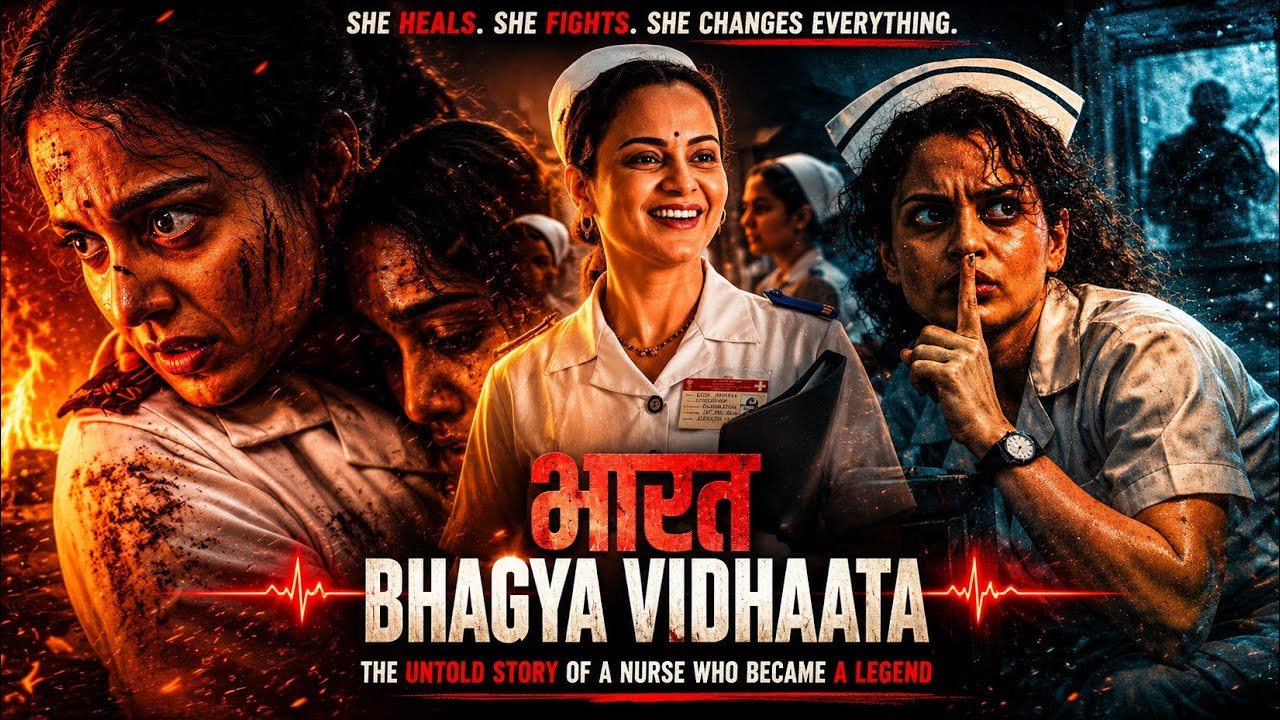
Prologue: A Sincere Subject, Uneven Cinema
Bharat Bhhagya Viddhaata arrives with a subject that demands emotional sensitivity and cinematic restraint. Written and directed by Manoj Tapadia, the Hindi thriller‑drama is set against the 2008 Mumbai terror attacks and shifts attention from the familiar geography of gunfire and siege to the less frequently dramatised courage inside Cama Hospital. Presented by Pen Studios in association with Manikarnika Films, Paramhans Creations, Eunoia Films and Floating Rocks Entertainment, the film stars Kangana Ranaut alongside Girija Oak, Smita Tambe, Suhita Thatte, Asha Shelar, Priya Berde, Esha Dey, Rasika Agashe, Amrutha Namdev, Aditya Mishra and Zahid Khan. With Ayan Sil as cinematographer, Dev Rao Jadhav as editor, and music by Aman Pant and Krsna Solo, the film has the framework of an urgent human drama. Its intention is sincere, its subject is worthy, but the execution struggles to convert reverence into consistently powerful cinema.
Plot
The story unfolds largely around Cama Hospital on the night of the 26/11 Mumbai attacks, focusing on doctors, nurses and staff who continued to protect patients while terror spread across the city. The hospital is not treated as a backdrop but as the emotional and ethical centre of the narrative. These characters are ordinary professionals trapped in extraordinary danger, forced to act with courage while surrounded by fear and confusion.
Kangana Ranaut’s central character becomes part of a desperate effort to keep patients safe, maintain order and respond to escalating panic. Pregnant women, injured patients, elderly citizens, support staff and medical workers all form part of a tense ecosystem where every decision carries consequence. Inspired by real courage, the film aims to restore visibility to people whose bravery was not shaped by spectacle but by responsibility.
The strongest portions are those rooted in practical fear—locked corridors, whispered warnings, hurried movements through hospital spaces, and the quiet dread of not knowing what is happening outside. Yet the screenplay does not always trust the natural force of the situation. It frequently underlines emotions already clear, leaning into verbal declarations when silence would have carried more weight.
Performances
Kangana Ranaut provides the film’s emotional spine. She is effective when projecting authority under pressure, and her screen presence anchors the crowded narrative. Her restrained passages—where anxiety, fatigue and resolve register through small gestures—are compelling. Even when the writing becomes emphatic, she keeps the film connected to its central idea of duty.
However, the material occasionally pushes her toward scenes designed to announce heroism rather than reveal it. In a story about everyday courage, the understated moments are the most moving.
Girija Oak brings sincerity and composure, adding credibility to the hospital environment. Smita Tambe leaves an impression with grounded presence. Suhita Thatte, Asha Shelar, Priya Berde, Esha Dey and Rasika Agashe contribute to the ensemble, though not all characters receive equal depth. The supporting cast helps populate the film with working people rather than ornamental figures, but several roles remain functional, representing courage or vulnerability without interior life.
Analysis
Manoj Tapadia approaches the film with visible respect for the subject, and that respect is both strength and limitation. The direction is careful and earnest, but the craft often lacks the tension and psychological layering required for a truly immersive survival drama.
The screenplay is most effective when observing procedure—the movement within the hospital, the uncertainty among staff, the moral urgency of protecting vulnerable patients. Yet it repeatedly chooses explanation over atmosphere. Characters often state what is already communicated visually, weakening emotional impact. A film of this nature benefits from restraint, especially because the historical context already carries tremendous weight.
Ayan Sil’s cinematography gives hospital spaces a grim, functional quality. Corridors and wards create confinement, and some frames capture the terrifying contrast between ordinary hospital life and sudden violence. Yet certain dramatic moments are shot with conventional thriller vocabulary that feels familiar.
Dev Rao Jadhav’s editing keeps the narrative moving but fluctuates in rhythm. Some tense sequences are cut with clarity, while other emotional scenes linger beyond their peak. The music by Aman Pant and Krsna Solo aims for solemnity and patriotic emotion but is sometimes too insistent. The score would have been more effective had it trusted the ambient fear of the hospital and the raw human stakes.
Verdict
Bharat Bhhagya Viddhaata is a sincere, respectful and well‑intended film that brings attention to a chapter of courage deserving wider recognition. Its focus on hospital workers during a night of national trauma gives it emotional importance, and Kangana Ranaut’s committed performance ensures that the film never feels indifferent to its subject. There are scenes where fear, helplessness and bravery of ordinary people come through with genuine force.
At the same time, the film falls short of becoming the piercing drama it could have been. Its writing is too explanatory, its emotional cues too visible, and its thriller elements lack sustained tension. As a tribute, it is dignified. As cinema, it remains uneven. Its theatrical prospects are limited by heavy tone, modest entertainment value and lack of broader audience pull beyond viewers drawn to the subject or Kangana’s presence.
Rating
- Critics Rating: 2.5/5
- Box Office Rating: 1/5