


VARANASI: Every year, Guru Purnima draws thousands of devotees to places of spiritual significance across India. The festival is observed as an expression of gratitude towards teachers and spiritual guides, celebrating a tradition that has shaped Indian thought for centuries. For many, the occasion is one of reverence and reflection. For others, it becomes the beginning of a journey that continues to influence their lives for decades.
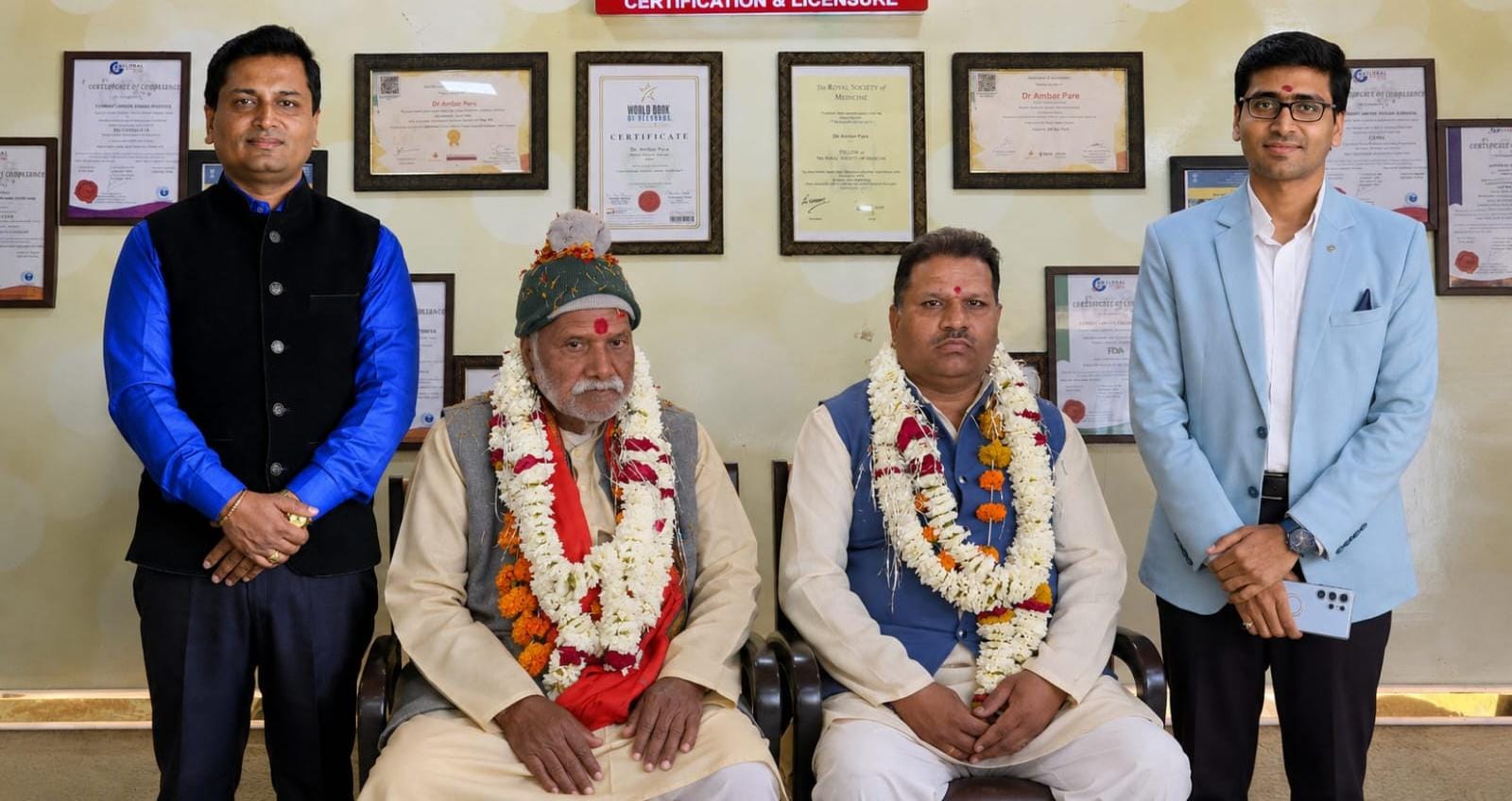
One such story dates back to Guru Purnima in 2005, when two brothers from Duliya village in Harda district, Madhya Pradesh received Guru Diksha at Dashashwamedh Ghat in Varanasi from Pujya Gurudev Shri Jamuna Prasad Chaturvedi Ji. What began as a sacred initiation became an enduring source of guidance, discipline and purpose that continued to shape their personal and professional lives.
The brothers, Dr. Ankur Pare and Dr. Ambar Pare, grew up in a setting where education and Indian knowledge traditions were valued. Their initiation introduced them to the Guru–Shishya tradition, an institution that has long served as one of the foundations of India’s cultural and intellectual heritage. Within this tradition, a Guru is regarded not merely as an instructor but as a mentor who nurtures character, responsibility and the disciplined pursuit of knowledge.
Pujya Gurudev Shri Jamuna Prasad Chaturvedi Ji, associated with the spiritual lineage of Mahayogi Mahavatar Shri Babaji, devoted his life to the study and teaching of Ayurveda, Yoga, Hatha Yoga, Pranayama, Mantra Vigyan, Astrology and traditional herbal sciences. His approach placed equal emphasis on knowledge, self-discipline and service. Students were encouraged to understand traditional wisdom not simply as inherited learning but as a responsibility to be practised with sincerity and applied for the benefit of society.
Over the years, the two brothers followed different professional paths while remaining connected by the values they received through their early spiritual training. Dr. Ankur Pare became involved in research, writing, social studies and entrepreneurial initiatives related to India’s traditional knowledge systems and herbal heritage. Dr. Ambar Pare focused his work on Ayurveda, Yoga, natural health and public awareness. Although their areas of work evolved independently, both have continued to acknowledge the formative influence of their Guru in shaping their outlook towards learning and service.
The continuity of this tradition is reflected in the work of Pujya Pt. Hemchand Chaturvedi Ji (Bhaiya Maharaj), who continues to guide seekers through Mantra Vigyan, Vedic rituals and Ayurvedic traditions. His efforts represent the ongoing transmission of a lineage that seeks to preserve and share traditional Indian knowledge with contemporary society.
The story of the Pare brothers illustrates a broader truth about the Guru–Shishya tradition. While Guru Diksha is often viewed as a religious ceremony, its significance frequently extends beyond ritual. For many disciples, it becomes the beginning of a lifelong process of learning, self-discipline and ethical responsibility.
Nearly two decades after their initiation at Dashashwamedh Ghat, the memory of that Guru Purnima continues to hold a special place in the brothers’ lives. More importantly, it reflects the enduring relevance of a tradition that continues to inspire individuals across generations. In an era of rapid social and technological change, the Guru–disciple relationship remains a reminder that knowledge gains its greatest value when it is accompanied by humility, discipline and a commitment to the welfare of others.