


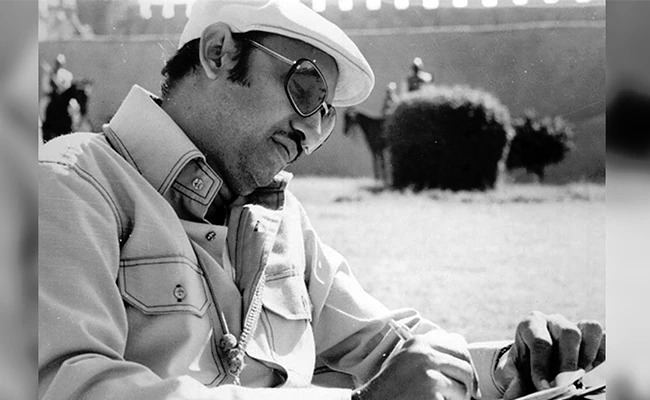
Prologue: The Architect of Entertainment
In the 1970s and 80s, when Indian cinema was torn between realism and escapism, one man chose to embrace spectacle. Manmohan Desai, affectionately called Manji, became the pioneer of “Masala” cinema — a formula that blended high drama, action, romance, comedy, music, and the iconic “lost‑and‑found” plot. His films were not about logic; they were about emotion, coincidence, and conviction. He gave audiences a carnival on screen, redefining Bollywood forever.
Act I: Early Life and Filmy Roots
Born on February 26, 1937, in Bombay, Manmohan Desai hailed from a film family. His father, Kikubhai Desai, owned Paramount Studios (later Filmalaya), producing stunt films like Circus Queen and Golden Gang. Growing up amidst reels and sets, cinema was in his blood. After attending Wilson College, Manmohan began his career under the guidance of his elder brother, Subhash Desai, who was already a producer. Subhash gave him his first big break as a director, setting the stage for a remarkable journey.
Act II: The First Movie and Initial Struggles
At just 24, Manmohan Desai directed his debut film, Chhalia (1960), starring Raj Kapoor and Nutan. The film had memorable music by Kalyanji‑Anandji and was appreciated critically, but it was only a moderate success at the box office. The years that followed were difficult. Films like Bluff Master (1963) and Budtameez (1966), featuring Shammi Kapoor, failed to make a mark. For a while, it seemed as though Manmohan’s career might fade before it truly began.
Act III: Reinventing Himself — The Masala Shift
Realizing that critics and realism were not his domain, Manmohan Desai decided to focus on entertaining the masses. His first major hit came with Sachaa Jhutha (1970), starring Rajesh Khanna in a double role. The film’s success proved that Desai understood the pulse of the audience. But the true turning point came in 1977, his golden year, when he directed four back‑to‑back hits: Amar Akbar Anthony, Dharam Veer, Chacha Bhatija, and Parvarish. That year cemented his reputation as the master of masala.
Act IV: The Blockbuster Formula
Desai’s ultimate masterpiece was Amar Akbar Anthony (1977). The film featured the classic “lost‑and‑found” trope — three brothers separated in childhood and raised in different faiths (Hindu, Muslim, Christian), who reunite later. It was a celebration of secularism, family, and spectacle. Desai famously said, “I make what I like,” focusing on emotion over logic. His formula was simple: larger‑than‑life characters, dramatic reunions, high‑octane action, and music that became immortal.
Act V: Collaborations and Superstar Making
While Prakash Mehra gave Amitabh Bachchan the “Angry Young Man” image, it was Manmohan Desai who turned him into the ultimate commercial superstar. Together, they delivered a string of blockbusters: Suhaag (1979), Naseeb (1981), Coolie (1983), Mard (1985), and Desh Premee (1982). Desai’s films transformed Amitabh into a phenomenon, adored by audiences across India. His collaborations with other stars — Dharmendra, Jeetendra, Rajesh Khanna, and Rishi Kapoor — also produced unforgettable cinema.
Act VI: Behind the Scenes and Directing Style
Manmohan Desai’s directing style was rooted in storytelling that resonated with the common man. He understood family emotion, secular themes, and the joy of coincidence. His sets were grand, his narratives unapologetically melodramatic, and his films designed to be spectacles. He believed cinema was about conviction, not logic, and his audiences embraced that wholeheartedly.
Behind the scenes, he was known for his energy, his ability to manage large ensembles, and his instinct for blending music, drama, and action seamlessly.
Act VII: Personal Life and Tragic End
Desai’s personal life carried as much drama as his films. His wife passed away in 1979, leaving him devastated. In 1992, he became engaged to actress Nanda, marking a new chapter of hope. But tragedy struck again. On March 1, 1994, Manmohan Desai died after falling from his balcony — a death that remains shrouded in mystery. His passing ended an era, but his films continue to live on, celebrated for their joy and spectacle.
Act VIII:The Road to Blockbusters
By the late 1960s, Desai realized that his strength lay not in realism but in entertaining the masses. He embraced melodrama, coincidence, and emotional reunions. His first major breakthrough came with Sachaa Jhutha (1970), starring Rajesh Khanna in a double role. The film was a blockbuster, cementing his reputation as a commercial filmmaker.
The true turning point came in 1977, a year that defined his career. Within 52 days, he released four films — Amar Akbar Anthony, Dharam Veer, Parvarish, and Chacha Bhatija. All four became massive blockbusters, a feat unparalleled in Bollywood history. Desai famously said, “I make what I like,” ignoring critics who dismissed his films as illogical. He engineered applause through lost siblings, divine intervention, and strong mothers, creating a formula that resonated with millions.
Act IX: Iconic Collaborations
Manmohan Desai’s career was built on legendary partnerships.
- Amitabh Bachchan: While Prakash Mehra gave Bachchan the “Angry Young Man” image, Desai transformed him into the ultimate masala hero. Together, they delivered hits like Amar Akbar Anthony, Suhaag, Naseeb, Coolie, and Mard. Desai’s films showcased Bachchan’s versatility, blending action with comedy and emotion.
- Kader Khan: Their partnership was pivotal. Disappointed with other writers, Desai hired Kader Khan for Roti (1974). After hearing Khan’s dialogues, Desai was so thrilled that he gifted him a Panasonic TV, a gold bracelet, and cash, declaring, “If the dialogues are good, I will pick you up and put you on my head like a Ganpati and dance.” Khan became an integral part of Desai’s films, both as a writer and actor.
- Dharmendra: Desai’s collaborations with Dharmendra produced blockbusters like Dharam Veer and Chacha Bhatija, cementing their status as a dominant action‑film pairing.
- Amrish Puri: In the 1980s, Amrish Puri became a frequent presence in Desai’s films, providing depth to villainous and authoritative roles. His commanding screen presence perfectly complemented Desai’s larger‑than‑life narratives.
Act X: Contribution to Hindi Cinema
Manmohan Desai’s greatest contribution was the creation of the masala genre. He pioneered the mix of drama, comedy, action, and music, crafting films that were escapist yet emotionally resonant. He believed cinema should offer joy to the common man, focusing on family unity and emotional reconciliations. The iconic song “Anhoni ko honi kar de” from Amar Akbar Anthony epitomized his philosophy — turning impossibility into possibility through sheer conviction.
His films were not about logic but about spectacle. He perfected the “lost‑and‑found” formula, where siblings separated in childhood reunited dramatically, often across religious or social divides. He celebrated secularism, family bonds, and the triumph of good over evil, making his films timeless crowd‑pleasers.
Act IX: Top 5 Highest‑Grossing Films
- Amar Akbar Anthony (1977) — All‑time blockbuster, highest grosser of 1977.
- Coolie (1983) — Box office phenomenon, highest grosser of 1983.
- Suhaag (1979) — Super hit, highest grosser of 1979.
- Dharam Veer (1977) — Blockbuster, second only to Amar Akbar Anthony.
- Mard (1985) — Festival blockbuster, second highest grosser of 1985.
- Epilogue: The Showman’s Legacy
Manmohan Desai changed the face of Hindi cinema. He perfected the masala formula, gave audiences unforgettable spectacles, and turned Amitabh Bachchan into a commercial superstar. His films celebrated family, faith, and emotion, blending melodrama with music and action in ways that critics dismissed but audiences adored.
Today, he is remembered as the Showman of Masala Cinema, a director who turned coincidence into conviction and melodrama into mass celebration. His legacy endures in every Bollywood blockbuster that follows the masala tradition, proving that Manmohan Desai’s carnival of cinema will never fade.