


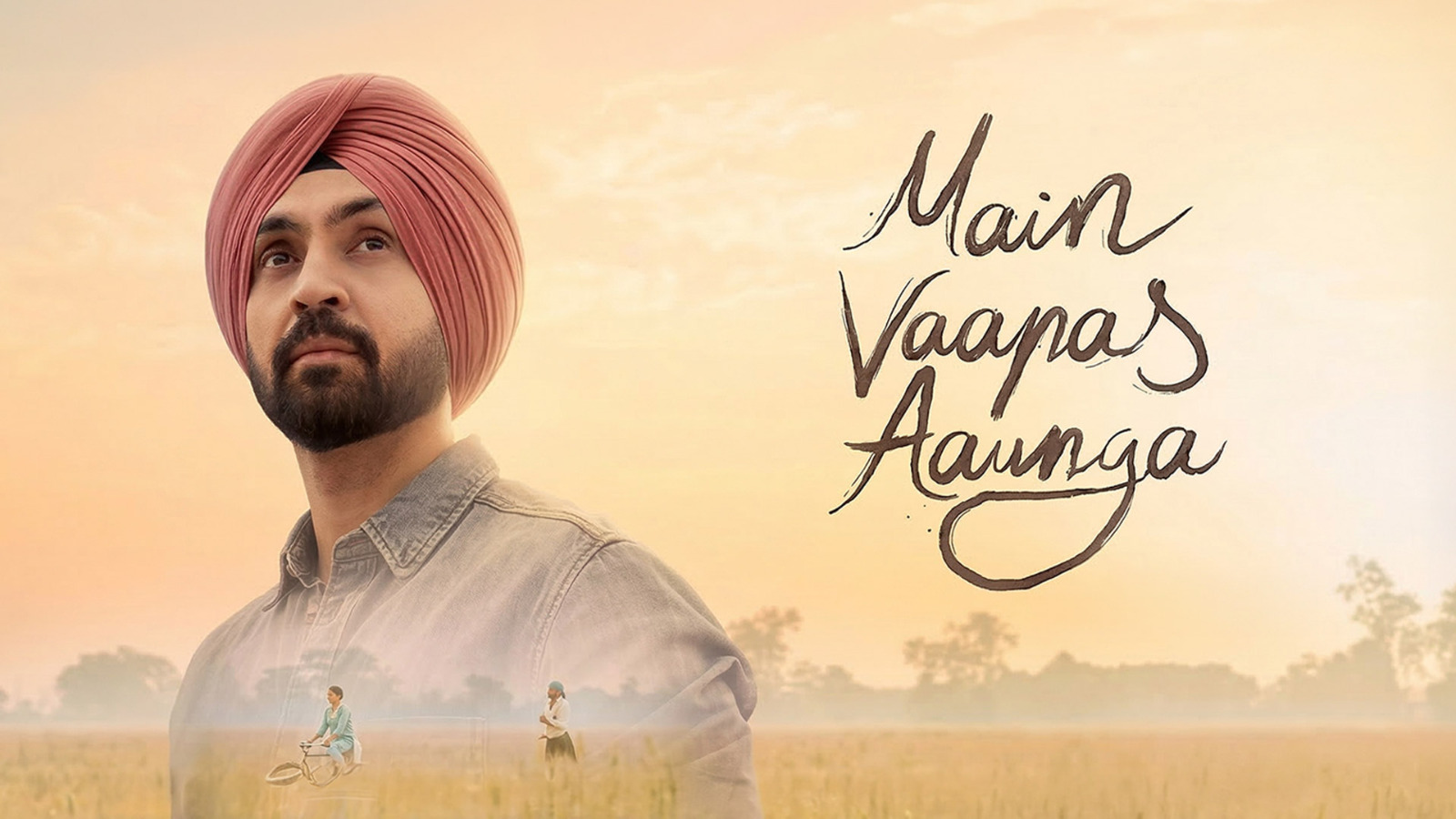
Prologue: Imtiaz Ali’s Return to Memory and Music
Imtiaz Ali has always been a filmmaker of journeys—both literal and emotional. With Main Vaapas Aaunga, he returns to familiar terrain but places his romantic restlessness against the bruising backdrop of Partition. The film, starring Diljit Dosanjh, Naseeruddin Shah, Vedang Raina and Sharvari, is mounted by Applause Entertainment, Reliance Entertainment and Window Seat Films. It is written by Ali and Nayanika Mahtani, with cinematography by Sylvester Fonseca, editing by Aarti Bajaj, and music by A. R. Rahman with lyrics by Irshad Kamil.
This is not merely a love story interrupted by history—it is a meditation on memory, loss, and promises that echo across generations.
Narrative Architecture – Love Interrupted by History
The film moves between past and present, weaving together two timelines. Naseeruddin Shah plays an ageing man burdened by the residue of a relationship that never reached closure. Diljit Dosanjh embodies the younger man who inherits this emotional wound, drawn into a quest to understand what was left behind.
The past belongs to Vedang Raina and Sharvari, whose youthful romance unfolds in the shadow of Partition. Their story is not treated as decorative flashback but as the emotional engine of the film. Fear, stolen time, and the devastating awareness that private lives can be broken by public events shape their bond.
Ali’s screenplay allows the timelines to converse—through recurring images, songs, silences, and places. The narrative pull lies not in suspense but in the gradual deepening of emotional knowledge. Love does not always end with separation; it hardens into regret, softens into prayer, or survives as unfinished memory.
Performances – Gravitas and Vulnerability
Diljit Dosanjh delivers a performance of quiet searching. He listens, observes, and absorbs, allowing transformation to occur through subtle shifts in gaze and rhythm. Having collaborated with Ali earlier in Amar Singh Chamkila, he understands the pauses and musicality of ordinary speech.
Naseeruddin Shah anchors the film with gravitas. His presence conveys the weight of a life lived with unresolved pain. Without dramatic outbursts, he suggests history through tired looks, faint tonal changes, and held breaths. He grounds Ali’s lyricism in lived experience.
Vedang Raina is effective in the younger timeline, capturing youthful certainty colliding with historical terror. Sharvari brings warmth and dignity, ensuring her character is not merely an object of longing. Together, they make the younger love story feel complete, not just preserved memory.
The ensemble creates emotional layering: Diljit and Shah provide reflective spine, Vedang and Sharvari supply the ache of what once was.
Technical Craft – Cinematography, Editing and Music
Sylvester Fonseca’s cinematography gives the film a soft, elegiac language. The past is fragile, every frame carrying the possibility of rupture. The present is subdued, visually marked by distance and searching. This contrast reinforces the idea that memory preserves colour even when life fades into regret.
Aarti Bajaj’s editing provides rhythm. Transitions between timelines are not mechanical but resonant—faces, gestures, or music echo across eras. Occasionally indulgent, the pacing sometimes stretches emotions already clear, but the broader design remains affecting.
A. R. Rahman’s score is central. It functions as memory, not mere decoration. Irshad Kamil’s lyrics carry longing without sentimentality. Songs deepen atmosphere, connecting private love to collective loss. The music becomes confession, prayer, and remembrance.
Thematic Resonance – Partition as Emotional Rupture
Ali’s familiar motifs—travel as self‑discovery, love as spiritual disturbance, music as confession—gain sharper edge in the Partition setting. The journey here is tied to displacement, inherited grief, and the question of whether belonging can survive physical separation.
The screenplay is expansive yet focused. Memory behaves imperfectly—scenes emerge as fragments, gestures, echoes. This suits a story about lives interrupted before they could explain themselves fully.
The film insists that Partition stories are not only about borders but about relationships suspended in time, families shaped by absence, and promises impossible to fulfil. It honours wounds that time has failed to heal.
Verdict and Box Office Outlook
Main Vaapas Aaunga is Imtiaz Ali in deeply felt mode. It succeeds because it understands that love can survive as memory, burden, and inheritance. Its occasional excesses—scenes stretched too long, lines weighted with visible poetry—are unmistakably Ali’s, but sincerity and performances make indulgences forgivable.
Diljit Dosanjh and Naseeruddin Shah are the strongest pillars, while Vedang Raina and Sharvari lend tenderness to the past. Together, they create a film that is moving, graceful, and emotionally resonant.
Ratings:
- Critics Rating: 4/5
- Box Office Rating: 3/5
Commercially, the film’s reflective pace may limit broad appeal, but its emotional strength will connect with audiences who appreciate lyrical storytelling. It is not designed for spectacle but for meditation, and in that lies its power.
Closing Note
Main Vaapas Aaunga is a cinematic elegy—poetic, melancholic, and sincere. It may not convert viewers resistant to Ali’s romantic intensity, but for those willing to enter its meditative rhythm, it offers a rewarding experience. It is a film about promises that echo across generations, about love that survives as unfinished memory, and about wounds that history refuses to heal.